

In partnership with

President’s Message
As medical professionals, particularly those of us working in employee health, occupational medicine, and acute care, we are trained to approach harm with discipline, evidence, and an unwavering respect for human life. That is precisely why the killings of Alex Pretti, an ICU nurse, and Renee Good are so profoundly disturbing.
Alex Pretti was not only a civilian—he was a healthcare worker. Someone who spent his professional life stabilizing the critically ill, responding to emergencies, and upholding the ethical obligation to preserve life under pressure. For veterans, no less. The killing of a nurse by agents of the state should send shockwaves through every clinical discipline. It is not simply a criminal justice issue; it is an employee safety issue, a workplace violence issue, and a moral failure that intersects directly with our work.
In employee health, we spend enormous effort mitigating risk: preventing injuries, managing exposure, responding to violence in the workplace, and supporting staff after traumatic events. We understand that poor training, inadequate oversight, and cultures that normalize excessive force lead to preventable deaths. When a federal agency repeatedly demonstrates these failures—with fatal consequences—it is not unreasonable to call for its dismantling and replacement with systems that meet basic professional standards.
These incidents raise questions we cannot ignore:
What constitutes acceptable use of force against civilians?
What level of training and psychological screening is required for those empowered to use lethal force?
How do we reconcile the routine scrutiny applied to healthcare workers with the apparent lack of accountability for federal agents?
If a hospital or employer tolerated patterns of behavior that resulted in repeated civilian deaths, we would demand leadership changes, external investigation, and regulatory intervention. The same expectations must apply here. Independent prosecution, full transparency, and meaningful consequences are not radical demands—they are foundational principles of safety culture.
As clinicians and employee health leaders, our outrage is not ideological. It is professional. It comes from lived experience with the consequences of violence, trauma, and institutional failure. We advocate not because we are political, but because we understand what happens when systems abandon restraint, accountability, and respect for human life.
Justice for Alex Pretti and Renee Good is not optional. Nor is serious structural reform. Anything less undermines the very standards of safety and ethics we are expected to uphold every day in our own workplaces.
Uberdoc is a digital healthcare platform that connects patients and employers with top doctors through transparent pricing and fast access.

Uberdoc has exams available right now in most parts of the country. Reply here if you're ready to accept exams from Uberdoc and we'll get you set up. (members only)
🎥 Webinar Replay: Employer Communication in Occupational Health
Thursday’s webinar on Effective Employer Communication in Occupational Health generated strong engagement and thoughtful discussion—clear evidence that this remains one of the most challenging (and high-impact) aspects of occupational health practice.
If you weren’t able to attend live, or want to revisit specific segments, the full replay is now available:
The session focused on:
Why employer communication often breaks down despite good clinical intent
Common documentation and messaging missteps that create downstream conflict
Practical frameworks for aligning clinical decisions, OSHA requirements, and employer expectations
How clearer communication directly affects trust, utilization, and long-term employer relationships

The best HR advice comes from people who’ve been in the trenches.
That’s what this newsletter delivers.
I Hate it Here is your insider’s guide to surviving and thriving in HR, from someone who’s been there. It’s not about theory or buzzwords — it’s about practical, real-world advice for navigating everything from tricky managers to messy policies.
Every newsletter is written by Hebba Youssef — a Chief People Officer who’s seen it all and is here to share what actually works (and what doesn’t). We’re talking real talk, real strategies, and real support — all with a side of humor to keep you sane.
Because HR shouldn’t feel like a thankless job. And you shouldn’t feel alone in it.
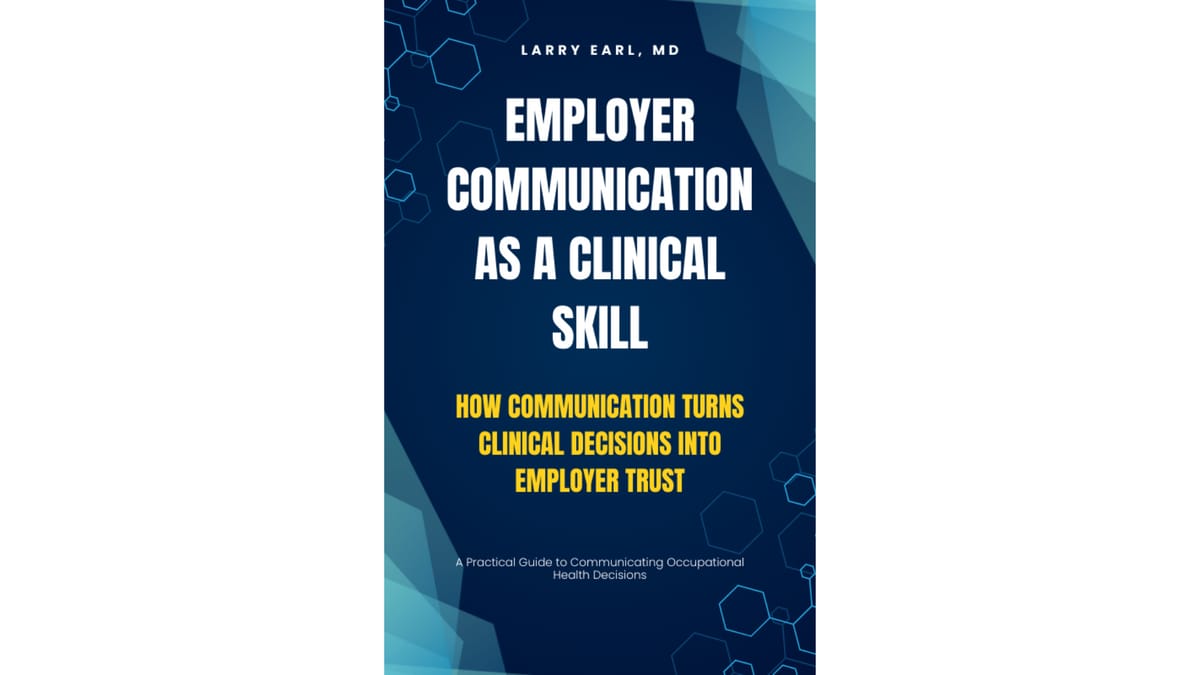
📘 Go Deeper: Employer Communication Practice Guide (Ebook)
The webinar intentionally stayed high-level. For those looking to operationalize these concepts inside their own clinic or health system, we’ve developed a companion Employer Communication Practice Guide.
This ebook expands on:
What employers should (and should not) receive for common occupational health services
Standardized communication pathways by service line
Documentation guardrails that reduce friction and legal risk
Real-world examples you can adapt to your workflows
👉 Access the Employer Communication ebook:
🤝 Want Hands-On Help? 1:1 Strategy Sessions with SensiaTech
For organizations that want to move beyond theory and actively improve employer communication at scale, NAOHP is offering 1:1 consultative sessions in partnership with SensiaTech.
These sessions are designed for clinics and health systems that want to:
Identify where employer communication is breaking down today
Improve intake, documentation flow, and employer-facing outputs
Strengthen employer trust while maintaining clinical and regulatory integrity
Align communication practices with technology and workflow design
Revolutionize Employee Healthcare with Sensia Tech™

Free Intro Class today:
Certified Work Comp Injury Management Professional (CWIMP)
For clinicians and operational leaders who want to move beyond episodic injury care and build disciplined, employer-trusted injury management programs. CWIMP focuses on the practical systems behind consistent triage, defensible decisions, effective employer communication, and predictable outcomes across workers’ compensation cases.

Next Class starts February 2, 2026
Free Intro Class:
Date: January 26, 2026, 1 PM Pacific
Speaker: Michael Stack
Sales & Marketing Office Hours
How many follow-ups are actually appropriate before an employer is truly not interested?
In our February Occ Med Sales Office Hours, we’ll break down how effective outreach cadence really works, why silence isn’t the same as disinterest, and how to stay persistent without damaging relationships.
You’ll learn how to interpret light signals, set realistic follow-up expectations, and apply disciplined persistence that reflects how Occ Med decisions actually unfold.

Persistence Without Annoyance: Designing Your Occ Med Outreach Cadence
Date: February 12th |
10 a.m. Pacific, 1 p.m. Eastern
Speaker: Ira Pasternack, Dave Saslavsky
Individual Certification - with Dena Kirk
Individual Certification in Occupational Health Practice Management is the perfect way for you to make sure you have what it takes to run a successful occupational health program. This two-year certificate will help equip you with the skills and knowledge necessary to implement an effective occupational health model, as well as provide guidance on staffing models, financial management, quality management and more

Becoming a Safety Leader in Healthcare
The Expanding Role of the Nurse in Health Care Safety
Goal: Master the evolving intersection of occupational health and safety leadership.
Key Topics:
• Shifting expectations of OHNs: from clinical care to system safety oversight.
• Understanding the dual lens of employee and patient safety.
• Introduction to Total Worker Health® principles in hospital settings.
• The business case for nurse-led safety programs (ROI, risk reduction, engagement).

Target Audience:
Registered Nurses, Occupational Health Nurses, and Employee Health professionals transitioning into or expanding safety leadership roles in healthcare systems.
Free Intro Class:
Date: February 19, 2026, 9 AM Pacific
Speaker: Shanna Dunbar
Recent Events:

Grow your business to new heights with Net Health’s Occupational Health EMR.
🏭 Occupational Health Industry News & Signals
Industry News — Week of January 19, 2026
Workplace Injury & Illness Rates Continue to Decline
New BLS data show continued modest declines in employer-reported injury and illness rates, reinforcing long-term trends across multiple sectors.
🔗 BLS Survey of Occupational Injuries & Illnesses (SOII):
https://www.bls.gov/news.release/osh.nr0.htm
Fatigue & Ergonomics Rising as Core Safety Risks
Federal guidance continues to emphasize fatigue, long work hours, and ergonomic strain as leading contributors to workplace injury—especially in logistics, healthcare, and manufacturing.
🔗 OSHA Worker Fatigue Resources:
https://www.osha.gov/worker-fatigue
NIOSH Capacity Stabilizing After Prior Cuts
NIOSH staffing and research capacity appear to be stabilizing following significant reductions in 2025, restoring access to key workplace health guidance and research.
🔗 NIOSH Program Updates:
https://www.cdc.gov/niosh/enews/
OSHA Enforcement Reinforces Foundational Safety Controls
Recent enforcement actions tied to trenching and excavation hazards underscore that basic safety controls remain a top OSHA priority.
🔗 OSHA Trenching & Excavation Safety:
https://www.osha.gov/trenching-excavation
Accommodation & Return-to-Work Risk Increasing
Employment and compliance guidance continues to highlight disability accommodation and return-to-work issues as growing employer risk areas.
🔗 EEOC Disability & Accommodation Guidance:
https://www.eeoc.gov/disability-discrimination
In brief: Injury rates may be trending down, but fatigue, ergonomics, accommodation risk, and enforcement exposure continue to rise—reinforcing the need for clear clinical decision-making and predictable employer communication.